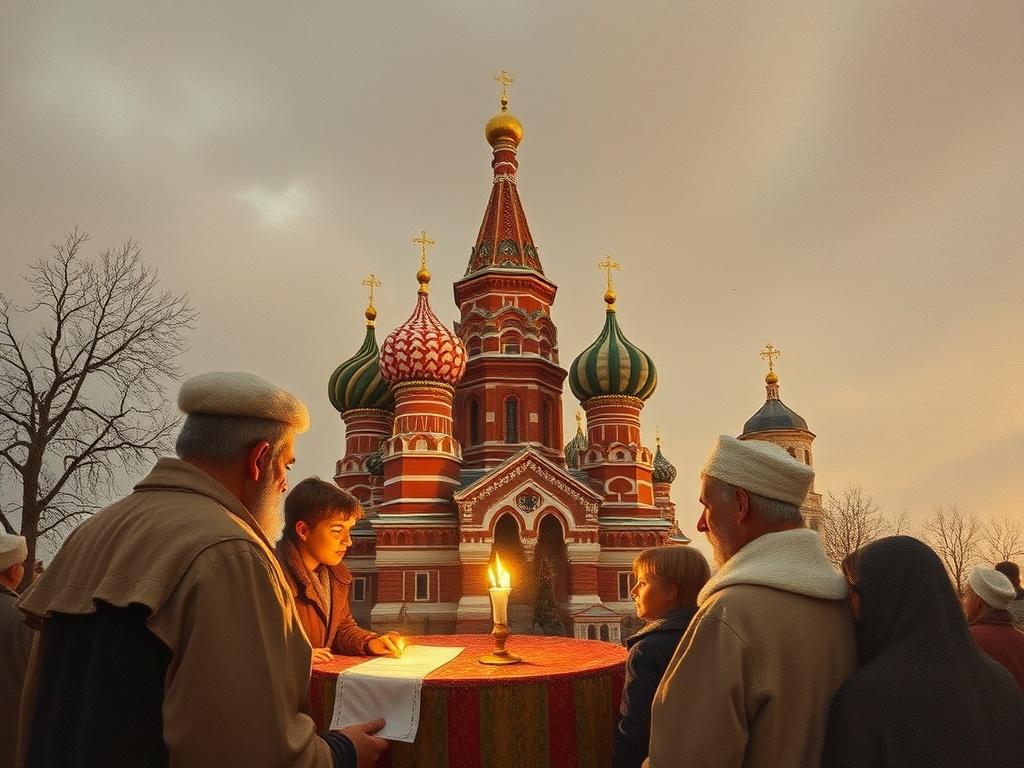
Charity has often traveled alongside culture, power, and belief, bending to history’s pressure yet stubbornly persisting as a human impulse to ease another’s burden. In Russia, that impulse takes a long, winding path—from bustling parish kitchens and monastery hospices to modern foundations and donor networks. This article traces the История благотворительности в России: от древности до наших дней, a sweeping arc that touches faith, statecraft, social reform, and civic imagination. It’s a story not of a single institution, but of a cultural habit that adapts to each era’s questions about wealth, responsibility, and community.
Ancient roots: hospitality and almsgiving in early Rus
Long before formal charities existed, communities in the lands that would become Russia practiced hospitality as a civic duty. Even in small villages, guests and travelers were sheltered, fed, and sent on their way with songs, greetings, and practical aid. This was less about philanthropy as we imagine it today and more about reciprocal obligation—an unwritten social contract that reinforced trust and safety in precarious landscapes.
With the adoption of Christianity, acts of mercy acquired a sacred frame. The church preached almsgiving as a concrete expression of faith, linking generosity to salvation and moral standing. Alms were not only money; they included bread, clothing, and time—the labor of mending a cloak for a pauper or guiding a blind traveler to the next village. In this sense, charity became a communal practice, embedded in the rhythms of worship and festival, not a separate institution with a ledger and board of directors.
Even the poorest households participated in this culture of giving. Sharing what little one had—whether a crust of bread, a blanket, or labor—was a way of affirming the dignity of every person. Charity, then, was as much about building social cohesion as it was about alleviating individual need. It also laid groundwork for a future where religious spaces would host the sick, the elderly, and the destitute in ways that could be observed, remembered, and replicated in new forms.
Medieval to early modern charity: monasteries, parishes, and noble patronage
As towns grew and the church’s organizational reach extended, charitable activity became more formalized. Monasteries emerged as dedicated hubs for mercy: they cared for the ill, housed beggars, provided alms to the needy, and offered shelter to wayfarers. Monastic libraries and scriptoria borrowed wealth in order to translate moral imperatives into concrete help. The monastery, in many regions, was the first universal shelter—a kind of public welfare institution in a world where “public” was defined differently than today.
Parish churches extended the circle of mercy beyond the monastery walls. Local priests organized distributions, helped fund bread lines during harvest shortfalls, and organized care for orphans and widows. In many communities, the parish became the most reliable, long-standing channel through which the faithful could translate piety into practical aid. This network bridged rural humility and urban need, creating a durable pattern of local philanthropy that could withstand shifting political winds.
The medieval period also witnessed patronage from rulers and aristocrats who saw charity as a sign of legitimacy and refinement. Endowments for hospitals, almshouses, and educational programs appeared in capitals and provincial towns alike. These gifts often carried the prestige of founders—monarchs, princes, or wealthy merchants—while weaving a social contract that linked personal honor to public welfare. The endowment model, though not yet codified as a modern foundation, introduced a moral economy in which wealth was stewarded for communal good rather than merely displayed.
Across regions, charitable practice took varied shapes—mirrored by local needs and religious orders. Some communities prioritized care for the sick during plagues; others prioritized education or support for widows. The throughline remained the same: mercy required sustained resources, organized effort, and a publicly recognized obligation to the vulnerable. In this sense, the medieval period helped crystallize a durable belief that charity is a shared project, not a private favor.
Imperial Russia: philanthropy, reform, and the rise of organized aid
The Russian Empire expanded the scale and complexity of charitable activity. With centralized governance and a growing urban class, philanthropy began to resemble a modern public service in embryo: organized funds, formal committees, and cross-regional networks. Hospitals, schools, and shelters multiplied, funded by noble patronage, merchant capital, and religious institutions alike. Charity, in this era, was increasingly seen as a legitimate public good that could be measured, audited, and expanded.
Educating the young, caring for orphans, and ensuring access to medical care became common aims of philanthropic institutions. These efforts often linked to broader social reform movements, as reformers argued that a more equitable society would be stronger, more productive, and more humane. Endowments and charitable trusts became a familiar language for translating wealth into social capital. While government policy was far from universal or seamless, private philanthropy and state welfare began to share the stage, each shaping the other in iterative, sometimes contentious, ways.
Church, state, and civil society intersected in surprising places. A noble’s gift to a hospital might also reflect loyalty to the crown, religious devotion, or a desire to leave a lasting architectural mark. A merchant’s donation to education might be driven by a belief in practical virtue—a belief that a more knowledgeable populace would, in turn, cultivate a more stable economy. The result was a mosaic of philanthropic forms: endowments, benefactions, charitable societies, and public fundraising campaigns that reached into both urban monuments and village cottages.
Crucially, this period also established a domestic voice for charity in public life. Newspapers, pamphlets, and charity concerts began to appear, disseminating charitable narratives and mobilizing donors far beyond the city gates. The social fabric stretched to accommodate a broader sympathy for the destitute, a trend that would later inform both revolution-era critique and post-imperial reinventing of welfare. In short, imperial Russia built a robust, if uneven, scaffold for organized relief that later generations would redraw in new colors.
Revolution, upheaval, and the Soviet decades: charity under state leadership
The upheavals of the early 20th century shook loose much of the old charitable order. The 1917 revolution and the ensuing civil conflict disrupted traditional institutions, dismantling many private and church-led efforts. Yet the impulse to care for others persisted in new forms. In the Soviet era, charity did not vanish; it was redirected, often absorbed into state-led welfare programs and mass organizations designed to mobilize citizens for collective goals. The question shifted from “Who should give?” to “How should the state organize care for the vulnerable?”
Under socialism, the state assumed primary responsibility for social welfare: healthcare, pensions, education, housing, and employment support became universal claims, theoretically available to all. Private philanthropy faced legal and ideological constraints; religious charitable activity was curtailed or transformed to fit the mold of state atheism or secular philanthropy. Yet some of the old motivations persisted in new wrappers: volunteerism, charitable drives, and informal networks continued to operate in communities, schools, workplaces, and neighborhood committees, often at the periphery of official visibility.
During the mid-to-late Soviet period, the state used centralized planning to deliver services that previously depended on private donors and church almsgiving. Hospitals expanded, orphanages grew, and social workers organized aid within a system that valued collective achievement over individual generosity. Public campaigns—often framed as moral education or civic duty—invited citizens to participate in voluntary labor, blood drives, and disaster relief efforts. In this sense, the era codified charity within a public utility: help was available, but it came from the state rather than a private donor circle.
The transformation was not without tension. For many observers, the suppression of independent philanthropic institutions meant a loss of the intimate, localized knowledge that small charitable acts carried. For others, the expansion of universal welfare felt like a pragmatic realization of social justice, even if the charitable impulses had to be reconciled with ideology. The legacy of this period would later fuel debates about civil society, autonomy, and the proper balance between state provision and private initiative in post-Soviet Russia.
Post-Soviet revival: a new era of independent philanthropy and civic engagement
The collapse of the Soviet system opened a space for a renaissance of charitable life. Independent foundations, donor networks, and non-governmental organizations emerged rapidly, motivated by a mix of humanitarian impulse, civil society building, and global philanthropic paradigms. This period saw the introduction of legal frameworks for charitable activity, the creation of grant-making organizations, and the professionalization of philanthropy. Donors began to fund everything from medical research to cultural preservation, from social services to education innovation.
With the rebirth of civil society came new challenges: ensuring accountability, measuring impact, and navigating a complex regulatory environment. Philanthropic actors learned to partner with government, business, and international organizations, creating hybrid models that blended public and private resources. The result was a more diverse philanthropic ecosystem—one that could respond to regional disparities, urban-rural gaps, and evolving social needs in ways that felt both practical and aspirational.
In everyday life, charitable giving took on more visible forms. Community foundations multiplied, donor-advised funds appeared, and corporate social responsibility programs deepened. Alongside formal organizations, informal networks—neighborly drives, school fundraisers, and religious fellowship groups—continued to embody the spirit of giving in a more personal, immediate way. This hybrid landscape represents a maturation of the История благотворительности в России: от древности до наших дней, showing how deeply the act of giving remains woven into the fabric of Russian society, even as its institutions change shape.
Forms, agents, and mechanisms of charity through the ages
Across centuries, charity in Russia took many forms, each shaped by its era’s social, political, and religious contours. Some mechanisms were timeless—almsgiving, hospitality, and care for the vulnerable—while others were modern innovations—fundraising campaigns, grant-giving foundations, and volunteer networks. The evolution reflects a core truth: philanthropy is both a mirror of the society that sustains it and a tool for shaping that society toward its ideals of humane governance and communal responsibility.
One enduring thread is the church’s historical role as a mobilizer of aid. Even as political authority shifted, religious institutions remained a focal point where people could give, learn, and support those in need. The late imperial period’s charitable societies and hospital networks built on this legacy, translating religious duty into organized public service. In the post-Soviet period, faith communities again became important partners in social welfare, balancing spiritual care with practical aid in neighborhoods that needed it most.
Another constant is the moral economy of giving—how wealth, status, and responsibility intersect in the act of helping others. In old Rus, a noble’s endowment could elevate the entire family’s standing while advancing a public good. In modern Russia, charitable giving often blends personal philanthropy with professional management and transparent reporting, mirroring global standards while staying rooted in local contexts. Across these shifts, the question remains the same: what does it mean to care for one another in a society that is always negotiating wealth, power, and mercy?
How the modern landscape looks today
Today, charity in Russia operates within a plural ecosystem. There are private foundations that fund medical research, education initiatives, and cultural preservation; donor-advised funds that empower individuals to direct giving with clarity and accountability; corporate programs that tie business strategy to social impact; and non-profit organizations that serve communities with tailored, local responses. This mix reflects a mature, plural civic life where giving is both a personal act and a structural instrument for social change.
Critics and advocates alike agree that the field has matured but continues to grapple with questions of access, equity, and sustainability. Issues such as regional disparities, the visibility of small grassroots groups, and the long-term reliability of funding—especially in times of political or economic flux—are central to ongoing conversations about what a just philanthropy should look like. Yet the underlying impulse remains constant: people want to help one another, and institutions exist to translate that impulse into durable, practical outcomes.
As an observer and writer who has spent years studying charitable life in various cultures, I’ve seen how Russia’s charitable culture travels between humility and ambition, between the village church and the city grantmaking office. It’s not a straight line but a braid—threads of tradition, reform, and innovation intertwining in ways that reveal both continuity and change. The story continues to unfold, guided by communities that refuse to accept suffering as fate and by donors who recognize that generosity is a form of social investment—in health, education, dignity, and hope.
Key forms and practices by era
- Ancient and medieval: hospitality, almsgiving, parish leadership, and monastery-based care for the sick and travelers.
- Imperial Russia: endowments, hospitals, schools, and charitable societies funded by nobles, merchants, and religious institutions.
- Soviet era: state-led welfare programs, mass mobilization, and voluntary labor within a planned economy.
- Post-Soviet era: independent foundations, NGOs, donor networks, and hybrid partnerships with government and business.
Representative institutions and practices (illustrative, not exhaustive)
| Era | Core impulse | Representative forms or practices |
|---|---|---|
| Ancient/Early Rus | Hospitality and religious almsgiving | Monasteries offering shelter, bread, and care; parish distributions; informal neighborly aid |
| Medieval to early modern | Endowments and networks of mercy | Monasteries, churches, noble patronage, and endowment-funded care for the sick and poor |
| Imperial Russia | Aristocratic and civil philanthropy | Hospitals, schools, orphanages funded by charitable societies and wealthy patrons |
| Soviet era | State welfare and mass participation | Public health programs, pensions, housing support; organized volunteerism within state plans |
| Post-Soviet Russia | Independent philanthropy and civil society | Foundations, NGOs, donor networks, corporate social responsibility programs |
A personal note on reading and reflection
When researching the arc of charity in Russia, I’ve found that the most telling moment often lies in small, unsung acts. A grandmother in a provincial town knitting sweaters for a hospital ward, a local school organizing a fundraiser to repair a roof, a family foundation supporting a library renovation—these are not dramatic headlines, but they are the stubborn gears that keep the system moving. The quiet, persistent work of neighbors helping neighbors is as much a part of История благотворительности в России: от древности до наших дней as the grand endowments described in century-old archives. These everyday gestures remind me that philanthropy is not only a policy issue but a human habit—one that survives regime changes, economic upheavals, and shifting cultural norms.
From my conversations with clerics, historians, and practitioners, I’ve learned that genuine charity grows where trust is earned. It thrives when donors and beneficiaries see each other as part of the same community, rather than as distant actors on opposite sides of a ledger. That sense of shared belonging—built over meals, in hospital wards, and around school desks—drives long-term resilience in the charitable sector. If there is a through line in История благотворительности в России: от древности до наших дней, it is this: generosity endures best when it remains anchored in local ties even as it scales to larger, more ambitious goals.
As Russia continues to navigate social challenges—rural poverty, urban inequality, aging populations, and emerging public health needs—the philanthropic ecosystem will likely keep evolving. Yet the core sentiment remains constant: people want to enact care, not merely to observe hardship. The evolving landscape invites new partnerships, more transparent governance, and innovative funding models. It invites a broader circle of participants—families, businesses, educators, faith communities, and international partners—to help translate compassion into measurable improvement. That invitation is, in many ways, a modern extension of a centuries-old duty to look after one another.
And so, the history of charity in Russia— История благотворительности в России: от древности до наших дней—continues to unfold in real time. Every donation, every volunteer hour, every foundation grant adds a thread to a tapestry that has long endured through seasons of want and plenty. If the past teaches anything, it is that charity is not a fixed monument but a living practice—one that evolves as societies change, yet keeps faith with the oldest human instinct: to care for another person in need.